
Fantasy sports are no longer legal in India following the introduction of the Online Gaming Act, 2025. The new law completely bans real-money fantasy platforms like Dream11, MPL, and My11Circle.
The earlier claim that fantasy games were “games of skill” doesn’t hold anymore. Under this law, paid fantasy contests are now seen the same way as gambling and carry strict penalties for operators and advertisers.
Here’s what this new Act means for fantasy sports in India, the punishments for violations, and the options still open to players.
Fantasy Sports Legality in India: Key Takeaways
- The Online Gaming Act, 2025, bans all real-money fantasy sports, whether they involve skill or chance.
- Only free-to-play or non-monetary versions of fantasy contests are allowed under this law.
- Payment gateways and banks are also barred from processing any transactions related to these platforms.
What Is the New Online Gaming Bill?
The Online Gaming Bill, 2025, changes how India views online gaming. It draws a sharp line between fun, skill-based gaming and money-led platforms that risk turning into gambling.
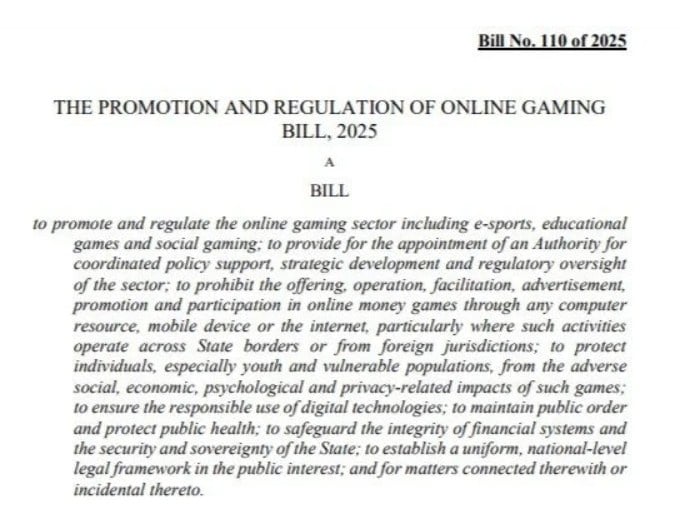
Called the Promotion and Regulation of Online Gaming Bill, 2025, it’s built to support safe digital play while shutting down real-money contests, including fantasy sports with entry fees.
The law also brings in an Online Gaming Authority to keep things fair, build clear rules, and guide how this space grows in the coming years
What the 2025 Online Gaming Act Says About Fantasy Sports?
The 2025 Online Gaming Act leaves no room for paid fantasy sports. It defines an “online money game” as any game that requires players to pay an entry fee or deposit money in the hope of winning cash rewards. This includes both skill-based and chance-based formats. Under Section 5, running or offering such games is completely banned.

Section 6 extends that ban to all forms of advertising, while Section 7 blocks banks and payment apps from handling related transactions, cutting off every route for real-money play.
Why Fantasy Sports Are Now Banned in India?
Fantasy sports are banned in India because they involve real-money entry fees and cash prizes, which fall under the definition of “online money games” in the 2025 Act.
The government said this step was necessary to tackle growing financial losses, gambling addiction, and the use of gaming apps for money laundering.
The new law also replaces all earlier state-level rules with a single national ban, closing the gaps that once allowed paid fantasy contests to continue running in some regions.
In Which Countries Are Fantasy Sports Still Legal
Several countries still permit fantasy sports under clear legal frameworks, particularly when they’re recognized as games of skill rather than gambling.

Here are some of the countries where Fantasy Sports are still legal:
- United States:
Permitted in most states under the “game of skill” classification.
- United Kingdom:
Licensed under the Gambling Commission; legal for skill-based operators.
- Australia:
Legal and regulated under interactive gaming laws.
- Canada:
Varies by province; many allow fantasy contests as skill games.
Effects of the Ban on Indian Fantasy Sports Platforms
After the 2025 Gaming Bill passed, platforms like Dream11, MPL, and My11Circle had to stop all paid contests. Many began refunding user balances and letting employees go as operations came to a halt.
Some companies began focusing on esports and free-to-play formats that comply with the new law. The IT Ministry also asked app stores and internet providers to block access to banned platforms.
The market reaction was also intense. Nazara Technologies’ stock dropped 9.70% on August 21, 2025, just a day after the Lok Sabha passed the bill.
Penalties for Operating or Promoting Fantasy Sports in India (Under the 2025 Gaming Act)
The new Gaming Bill imposes strict punishments for anyone caught engaging in online gaming, with harsher penalties for repeat offenders.
- Under the new Online Gaming Act 2025, fantasy sports involving money are treated as illegal online money games.
- Operators running such platforms can face up to three years in prison and fines reaching ₹1 crore for a first offense.
- Advertisers promoting banned fantasy platforms can be punished with two years of imprisonment and fines up to ₹50 lakh.
- Repeat offenders face stricter penalties, including up to 5 years in jail and fines of up to ₹2 crore.
Conclusion – Fantasy Sports Are No Longer Legal in India
Fantasy sports are no longer legal in India after the 2025 Online Gaming Act. The law treats all paid fantasy platforms as online money games, ending the “game of skill” protection that once applied.
Platforms like Dream11 and MPL must now switch to free or non-monetary versions to continue operating legally.
Players should withdraw any remaining balance and stop joining contests with entry fees or cash rewards.
It’s essential to stay up to date with official rules, avoid banned gaming apps, and play responsibly under the new legal framework.
FAQs
The ban threatens around 2 lakh jobs across the ₹25,000 crore industry, forcing mass layoffs as platforms shut paid operations or pivot to legal alternatives.
Platforms can transition to esports tournaments or free gaming without entry fees or cash prizes, which remain legal under the 2025 Act’s framework.
Platforms must provide 60-day withdrawal periods for funds, though data retention policies vary by company.
India’s complete prohibition stands in contrast to skill-based licensing systems in the US and UK, where regulated fantasy sports operate legally under government oversight.
Any format involving monetary stakes or financial returns is banned, regardless of the technology used.




Leave a Comment